
In the fertilizer production journey, downtime is the enemy of profit. Whether you are a newcomer or an experienced plant manager, you will eventually face technical questions. From granulation rates to energy consumption, how you answer these questions defines your operational efficiency. At Xincheng, we believe in empowering our partners with knowledge. In this fertilizer machinery troubleshooting and FAQ guide, we answer the questions our engineering team hears most often.
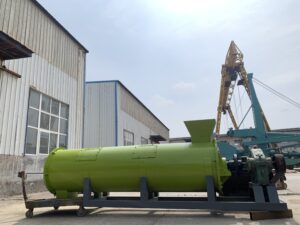
1:Why is my Granulation Rate lower than expected?
This is the #1 question we receive. Low granulation is rarely just about the granulator.
*The Xincheng Insight: Check your raw material moisture content. If the mix is too dry, it won’t bond; if too wet, it will stick to the drum walls. Furthermore, the particle size of your raw material (the “feed”) should be fine enough (usually <2mm) to form a uniform core.
Expert Tip: Check the angle and rotation speed of your drum—if these are not optimized for the specific density of your formula, granulation will always be sub-optimal.
2:How do I reduce energy costs in the drying stage?
Drying often accounts for 40-50% of your total plant energy bill.
*The Xincheng Insight: Don’t “over-dry.” Use an integrated humidity monitoring system that automatically stops the burner when the target moisture is reached. Additionally, checking your internal flight design (lifting boards) in the dryer ensures that materials are fully exposed to heat, maximizing thermal efficiency.
3:What is the most critical part to maintain?
Many people focus on the motors, but the real bottleneck is usually simpler.
*The Xincheng Insight: Conveying systems and gearboxes. A small blockage in a feeder or a neglected gearbox lubrication cycle stops the entire line. Implement a rigid daily schedule for grease and visual inspection. If it sounds “different,” check it now—don’t wait for the weekend.
4:Should I buy separate machines or a full line?
*The Xincheng Insight: Unless you are an expert in industrial integration, always buy a complete line. Mixing machines from different suppliers often leads to “interface nightmares”—where the belt speed doesn’t match the feeder speed, causing constant pile-ups.
Problems are Solvable
Technical issues are a natural part of operating a factory, but they shouldn’t dictate your profit margins. With the right design and a partner like Xincheng, you can anticipate problems before they occur.
Do you have a technical question not listed here? Contact our technical support center—our engineers are here to help.