
The traditional image of a fertilizer factory—dusty, labor-intensive, and manually operated—is rapidly becoming a thing of the past. In 2026, the industry is embracing “Smart Manufacturing.” An automated organic fertilizer production line is no longer a luxury but a necessity for businesses aiming for high consistency, safety, and reduced operational costs. As a tech-driven fertilizer machine manufacturer, Xincheng is leading this digital transformation, helping clients transition from manual labor to intelligent systems.
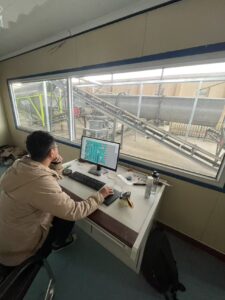
1. The Brain of the Plant: Centralized PLC Control Systems
At the heart of every automated organic fertilizer production line by Xincheng is the Centralized Control System (PLC).
Real-Time Monitoring: Operators can monitor temperature, moisture, and motor load across the entire line—from the compost turner to the packing scale—on a single touchscreen.
Precision Batching: Our automated batching systems ensure that the N, P, and K ratios, along with microbial additives, are mixed with an accuracy of ±0.5%, ensuring every bag of fertilizer meets the guaranteed analysis.
2. Labor Savings: From 20 Workers to 5
Automation significantly slashes human resource requirements. By integrating Xincheng technology, a typical large-scale plant can see a dramatic reduction in labor:
Automated Feeding & Conveying: Enclosed belt conveyors and bucket elevators move materials automatically, eliminating the need for manual hauling.
Robotic Palletizing: After the automatic bagging machine seals the bags, a high-speed robotic arm stacks them onto pallets with perfect precision.
Efficiency Gain:

In most cases, automation increases hourly output by over 40% while reducing labor costs by up to 70%.
3. Smart Quality Control and Data Tracking
An automated organic fertilizer production line provides something manual lines cannot: Traceability.
Batch Logging: The system records every batch’s production parameters. If a quality issue arises, you can trace it back to the exact time and raw material source.
Predictive Maintenance: Sensors detect vibrations or heat signatures in motors before they fail, alerting the team to perform maintenance and avoid costly unplanned downtime.
The move toward an automated organic fertilizer production system is an investment in long-term scalability and market competitiveness. Whether you are upgrading an existing facility or building a new state-of-the-art plant, Xincheng has the engineering expertise to integrate the latest smart technologies. Welcome to the era of intelligent fertilizer manufacturing—contact Xincheng today to see how we can automate your success!