
In the competitive organic fertilizer market, nutrient content is only half the battle. The physical quality of your pellets—specifically their fertilizer granule hardness and resistance to caking—determines your brand’s reputation. Crumbling granules lead to dust, waste, and unhappy farmers, while caked fertilizer makes mechanical application impossible. Achieving the “perfect pellet” requires a combination of precise formula, optimal moisture, and high-performance equipment. As a world-class fertilizer machine manufacturer, Xincheng explains the science behind high-quality granulation.
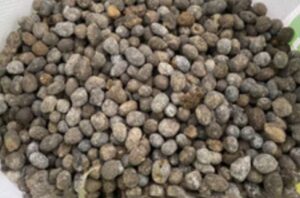
1. The Secret to Granule Hardness: Bonding and Moisture
The hardness of a pellet depends on the internal bonding force created during the granulation process.
Moisture Equilibrium: Too much water creates soft, “muddy” granules that collapse after drying. Too little water prevents the particles from sticking together. Our pan granulator allows for real-time water adjustment, ensuring the perfect balance for high-density pellets.
Binder Utilization: Depending on your raw material (like straw or sand-heavy manure), adding a natural binder such as bentonite or molasses can significantly increase the fertilizer granule hardness.
Fineness of Raw Materials: Finer raw materials lead to better bonding. Using a semi-wet material crusher ensures a uniform powder that packs tightly during granulation.
2. Solving the Caking Problem: Drying and Cooling
Caking occurs when moisture migrates to the surface of the granule during storage, creating “bridges” between pellets.
Complete Drying: Moisture must be reduced to below 5-10% (depending on the type). Our high-efficiency organic fertilizer dryer uses uniform heat distribution to remove internal moisture without cracking the shell.
Rapid Cooling: Bagging hot fertilizer is a recipe for caking. The rotary cooler brings the temperature down to ambient levels, stabilizing the granule’s structure before it reaches the bag.
- The Finishing Touch: Coating for Premium Quality
For commercial-grade fertilizers, the final step is often a fertilizer coating machine.
Anti-Caking Agents: Applying a thin layer of oil or powder prevents pellets from sticking together, even in humid environments.
Enhanced Aesthetics: Coating can give your pellets a glossy, professional finish that commands a premium price in the market.
Slow Release: Specialized coatings can also be used to control nutrient release, increasing the agronomic value of your product.
Why Trust Xincheng for Quality Control?
Since 2003, Xincheng has understood that your success depends on the quality of the pellets that leave your factory. Our fertilizer equipment production lines are integrated with sensors and precision controls to minimize human error and maximize fertilizer granule hardness. We don’t just provide machines; we provide the technical parameters and formulas required for premium organic fertilizer.
Don’t settle for “average” fertilizer. By optimizing your granulation process and investing in the right drying, cooling, and coating technology, you can produce pellets that stand out for their strength and shelf-life. Contact the Xincheng engineering team today for a customized solution to enhance your fertilizer’s physical quality!