
In 2026, the transition from chemical-heavy farming to regenerative agriculture is no longer just a trend—it is a global mandate. As soil degradation affects crop yields worldwide, the demand for high-quality organic matter has skyrocketed. But for an investor, the big question remains: Is the organic fertilizer business ROI strong enough? At Xincheng, we don’t just build machines; we help our clients build profitable enterprises. Let’s break down the economics of why now is the perfect time to start your factory.
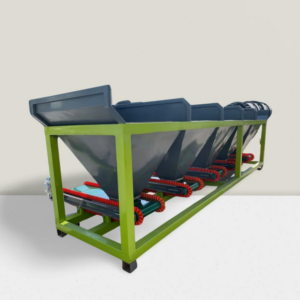
1. Low Raw Material Costs, High Added Value
The biggest financial advantage of an organic fertilizer plant is the cost of inputs.
*Waste to Wealth: Most raw materials—such as chicken manure, cow dung, straw, or food waste—are either free or come with a “disposal fee” paid to you by the waste producer.
*The Transformation: By processing $10 tons of raw waste through a Xincheng granulation line, you create a finished product that can retail for $200 to $400 per ton, depending on the nutrient enrichment and microbial content.
2. Understanding the ROI Formula
While every region varies, a typical organic fertilizer business ROI can be calculated by looking at the payback period. For a medium-sized 20,000-ton annual line:
*Capital Expenditure (CAPEX): Cost of land, factory building, and Xincheng fertilizer machinery.
*Operating Expense (OPEX): Electricity, labor, microbial agents, and packaging.
*Break-even Point: Most of our clients in Southeast Asia, Africa, and Latin America report reaching their break-even point within 12 to 18 months of full-scale operation.
3. Hidden Revenue Streams: Carbon Credits and Subsidies
The profit isn’t just in the bag of fertilizer. In 2026, two new revenue streams have emerged:
*Carbon Credits: By diverting waste from landfills (where it produces methane) to a composting facility, your plant may qualify for carbon credits that can be sold on international markets.
*Government Grants: Many nations are providing “Green Subsidies” to reduce reliance on imported chemical fertilizers, covering up to 30-50% of the fertilizer machine price for new startups.
4. Scaling with Xincheng: From Small to Industrial
The beauty of the organic fertilizer industry is its scalability.
*Phase 1: Start with a simple compost turner and sales of bulk organic compost.
*Phase 2: Add a pan granulator and a dryer to create commercial pellets.
*Phase 3: Integrate an automated packing and robotic palletizing system for large-scale export.
Xincheng designs modular lines that allow you to grow as your profits increase.
The organic fertilizer market is no longer a niche; it is a pillar of the future food system. With high margins, abundant raw materials, and strong policy tailwinds, the organic fertilizer business ROI remains one of the most attractive in the industrial sector. Ready to transform waste into a high-growth asset? Contact Xincheng today for a detailed feasibility study and equipment quotation!