
As commercial agricultural plantations expand across thousands of hectares, managing massive quantities of crop residues, pruning waste, and livestock manure efficiently has become a top operational priority. Traditional static piling takes months to decompose, breeds pests, and yields uneven nutrient quality. To meet the demanding processing timelines of large-scale cultivation bases, deploying a heavy-duty compost turner machine is essential. Modern aerobic turning systems rapidly convert raw agricultural waste into mature, pathogen-free organic fertilizer, ensuring timely soil replenishment between planting cycles.
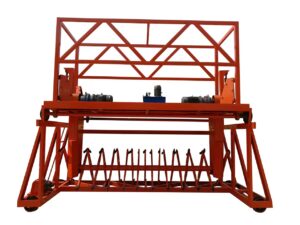
1:Integrated Composting and Fermentation Solutions
Large agricultural bases require systematic, mechanized aerobic fermentation solutions tailored to their specific raw material volumes and site layouts.
Custom Equipment Configurations: Drawing on manufacturing expertise dating back to 2003, Xincheng engineers both self-propelled windrow turners and groove-type rail turners to match open-field plantations and enclosed fermentation workshops.
Accelerated Microbial Decomposition: By regularly lifting, loosening, and aerating organic windrows, these fermentation systems maintain optimal oxygen levels, shortening the composting cycle from several months to just 10–15 days.
2:Operational Efficiency Advantages on Large Farms
Handling tens of thousands of tons of organic waste annually demands high-throughput machinery capable of continuous, low-labor operation.
High Hourly Processing Capacity: Utilizing a specialized compost turning machine enables a single operator to turn hundreds of cubic meters of organic material per hour, replacing dozens of manual laborers and front-end loaders.
Rapid Moisture Evaporation: Mechanical agitation releases trapped water vapor and ammonia gas efficiently, reducing raw material moisture levels quickly without extra thermal drying energy.
3:Technical Features for Fertilizer Quality and Fermentation Uniformity
Uniform aerobic fermentation directly determines the agronomic safety and nutrient stability of the finished compost applied to high-value crops.
Precision Temperature Regulation: Turning blades blend cooler outer layers with high-temperature core material, maintaining steady thermophilic temperatures (55°C–65°C) that destroy weed seeds, parasites, and harmful pathogens evenly throughout the entire pile.
Crushing and Homogenizing Action: High-torque rotating rollers break up compacted clumps during turning, producing loose, uniform organic matter ready for direct field spreading or downstream granulation.
4:Economic and Environmental Value for Agricultural Plantations
Integrating mechanized composting creates a closed-loop ecological cycle that lowers input costs while protecting plantation ecosystems.
Reduced Chemical Fertilizer Costs: Converting on-site crop stalks and orchard trimmings into nutrient-rich organic compost cuts external synthetic fertilizer purchases by up to 30% while improving soil organic matter and water retention.
Zero-Pollution Compliance: Controlled aerobic turning eliminates foul anaerobic odors and nutrient runoff, helping large agricultural bases meet strict environmental regulations.
In summary, equipping large agricultural plantations with an efficient compost turner machine transforms organic waste management into a fast, standardized, and profitable operation. By accelerating aerobic decomposition, ensuring uniform pathogen elimination, and lowering external fertilizer expenses, modern turning equipment empowers large-scale farms to achieve sustainable soil health and long-term economic returns.